
Searching Pike County Criminal Dockets
Begin with Search ARCourts, the official Arkansas portal. Its participant screen takes a first, middle, or last name. An organization or case description works too. Start with the least data you need. Narrow the results to Pike County and the right court once the controls appear. The portal draws public case information from participating Arkansas courts. It does not promise every old case, confidential matter, or document image.
If the web result falls short, work the full access chain. The Pike County Circuit Clerk answers circuit-record questions by phone at 870-285-2231. Mail goes to P.O. Box 219, Murfreesboro, AR 71958. Call before you visit 1 Courthouse Square in person. Email and fax channels are published too: Sabrina.Williams@PikeCountyAR.org and 870-285-3281. For a misdemeanor or other district criminal file, call the district office at 870-451-4602. Counter hours, terminal access, payment methods, and copy fees are not published. Confirm those first.
- Decide whether the matter is a circuit felony or a district misdemeanor before choosing a clerk.
- Search the participant name in Search ARCourts and narrow the results to Pike County and the correct court.
- Match the case number, charge, filing date, court level, and status rather than relying on a name alone.
- Read the criminal case events from oldest to newest, giving later settings and orders priority over earlier entries.
- Ask the proper clerk for the named charging paper, order, judgment, or certified copy when the index is not enough.
Pike County Criminal Docket Courts
A felony and a misdemeanor do not land at the same Pike County records counter. The Arkansas Judiciary description of Circuit Courts places general criminal jurisdiction in the unified Circuit Court. Pike County sits in the Ninth West Judicial Circuit. Its Circuit Clerk keeps the circuit criminal files. A separate 36th Judicial District Court, Pike County/Murfreesboro Department, handles limited-jurisdiction criminal and traffic matters.
| Matter | Court and custodian | Access route |
|---|---|---|
| Felony | Pike County Circuit Court and Circuit Clerk | Search ARCourts, then 870-285-2231 or the clerk counter |
| Misdemeanor | 36th District Court, Pike/Murfreesboro Department | Search ARCourts where available, then 870-451-4602 |
| Older or image-only file | The court that filed the case | Ask about the office index, paper file, bound docket, microfilm, or archive |
The official District Court overview lays out the lower court's limited role. Keep the split in mind. A docket search may return nothing. A district record is not presumed to sit in the Circuit Clerk's file. A circuit felony should not be routed to the district clerk just because both offices serve Pike County.
The official Circuit Court source also gives a clear visual reference. It shows how the court levels differ.
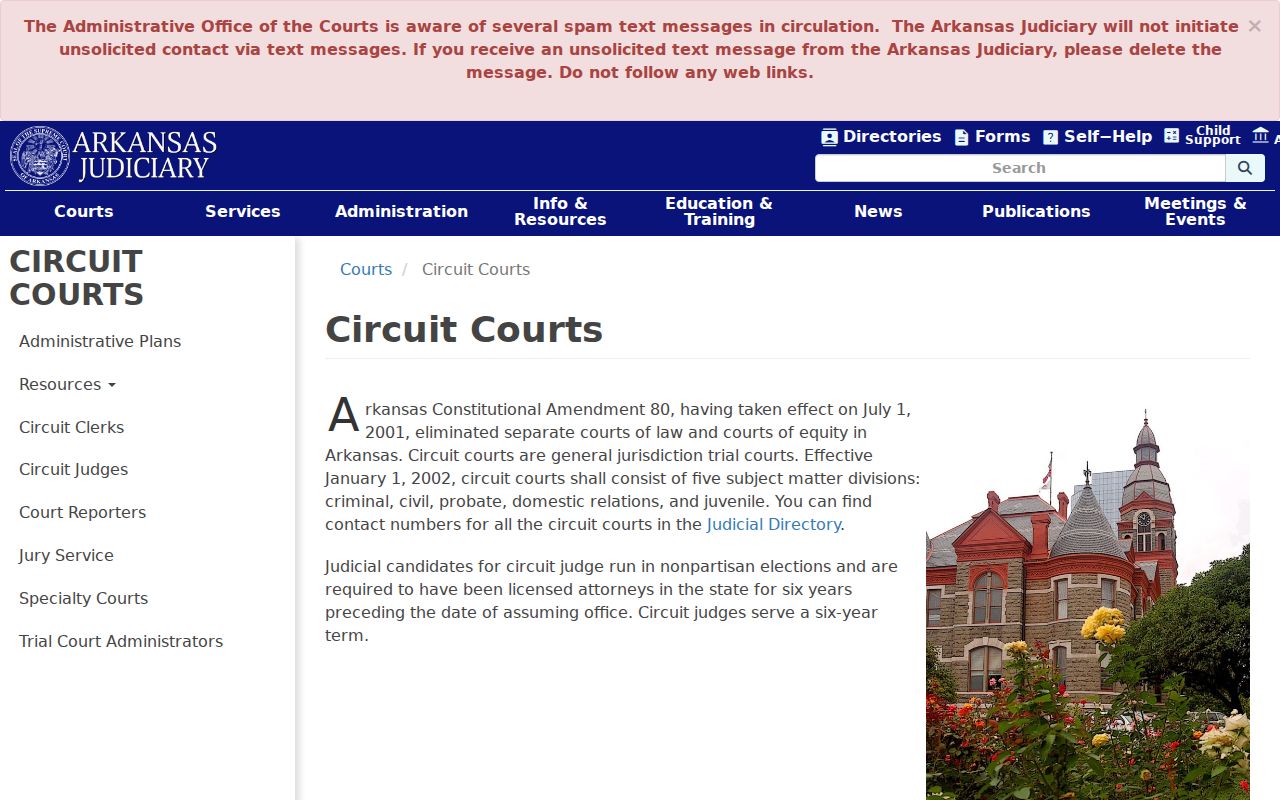
That structure tells you where felony record questions go: Pike County Circuit Court.
Inside a Pike County Criminal Docket
A Pike County criminal docket is a dated index. It logs case activity. Search ARCourts calls the public view "case information" and lists "case events" as the timeline. Expect the court and division, judge, case type, filing date, status, participants and counsel, charge information, scheduled events, disposition, public financial entries, and any permitted document links. Exact visibility varies by case. Pike County publishes no local abbreviation list.
| Case number | The court-assigned identifier. Pike County publishes no verified prefix guide, so copy the number exactly and do not infer a format. |
|---|---|
| Charge | The alleged offense, statute, or class. A charge line is an accusation, not proof of conviction. |
| Case events | A chronological index of the charging paper, service or warrant activity, pleas, motions, orders, hearings, and later review. |
| Settings | Dates for arraignment, pretrial work, trial, sentencing, or review, subject to a later reset or order. |
| Disposition | The way a charge or case concluded. Read the exact result and date rather than relying on “disposed” alone. |
| Documents | Links may appear when public, but an event can remain visible even when its filed image is not online. |
A web summary is not the same product as a filed document. The information or indictment states the formal charge. A signed order records the judge's ruling. A judgment carries the final operative terms. The Pike County Circuit Clerk or district clerk can identify the channel for a plain or certified copy, though Pike County does not publish a local copy form, rate, turnaround time, or payment method.
Pike County Criminal Docket Results
The most important Pike County reading rule is simple: a charge is not a conviction. It marks what the State alleges. A plea, ruling, or judgment shows more. It records what actually happened. In the same way, "disposed" says the court completed some form of action. That status alone does not separate conviction, dismissal, acquittal, transfer, or another result. Open the event history. Locate the disposition entry and signed judgment when available.
- Nolle prosequi
- The prosecutor formally declines to proceed with a charge at that time.
- Dismissed
- The charge ended without proceeding to the requested criminal judgment.
- Acquitted or not guilty
- The adjudication did not result in a finding of guilt.
- Bond forfeiture
- A consequence tied to bond conditions, often appearance. It is not, by itself, the case disposition.
- Deferred or probationary outcome
- A result that must be read from the exact order and should not be equated with dismissal.
Bond figures also require care. An amount or bond type concerns pretrial release, and it should stay separate from court costs, fines, restitution, or the sentence. When a short event label is unclear, request the actual order rather than filling the gap with an assumption.
How a Criminal Case Moves
A Pike County criminal docket usually opens with a charging instrument. Then comes service, warrant, or first-appearance activity. From there it records arraignment and plea events. Counsel and bond activity follows, along with motions, orders, and one or more settings. A case may resolve by plea or proceed to trial. Judgment, sentencing, and any appeal or post-judgment event complete the later part of the chronology.
Docket flow: Filing → Arraignment → Pretrial → Plea or Trial → Disposition → Sentencing
Read each step in date order. Do not assume every Pike County case uses every stage. Later orders can change earlier plans. The event line serves as an index marker. The filed paper holds the full legal text. A summary saying a motion was filed does not mean the judge granted it.
Pike County Criminal Portal Fields
For Pike County, Search ARCourts has replaced Public CourtConnect as Arkansas's current public discovery route. The participant screen opens with name and organization fields. Official descriptions also point to person, business, case-type, judgment, filing-date, and docket-filing-date search concepts. The live application can reveal more controls after entry. So use what the current screen presents and confirm each result belongs to Pike County.
| Field | Input | Use |
|---|---|---|
| First Name | Text | Participant given name |
| Middle Name | Text | Optional detail that may narrow similar names |
| Last Name | Text | Participant surname |
| Organization or Case Description | Text | Business, organization, or descriptive case terms |
| Search by | Selector | The landing screen begins on Participants |
The public landing screen for the criminal portal lists no fee. It also sets no account requirement and no cap on results. It posts no update cycle or coverage date. Links on that screen lead to navigation help and advice for Safari pop-up settings. If a Pike County criminal docket does not come back, try different spellings. Double-check the court level before calling the right clerk. A blank result can mean thin coverage, an old file, restricted access, or simply the wrong court.
Courts That Hold Criminal Dockets
Felony and other circuit-level criminal proceedings in Pike County belong to the Pike County Circuit Court. For records, go through the Circuit Clerk at the Pike County Courthouse. The district criminal docket sits with the 36th Judicial District Court's Pike County/Murfreesboro Department. Under the current administrative plan, Murfreesboro and Glenwood matters also run through that department. There are no separate city-court search sites. The Ninth West Circuit judge directory documents the circuit assignment.
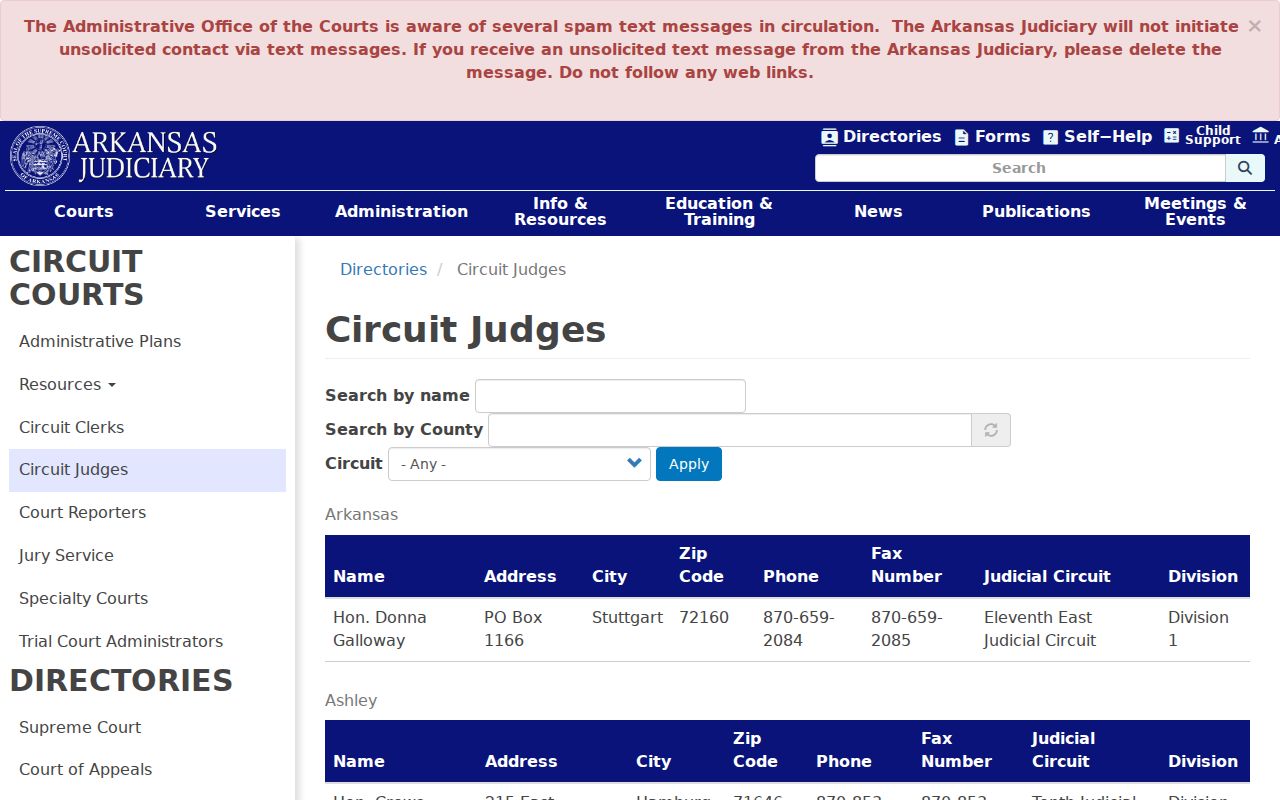
That directory is how you confirm a circuit entry belongs to Pike County's general trial court rather than the district docket. The lower court works differently. The Judiciary's district jurisdiction page shows why limited criminal matters rest with a different office.
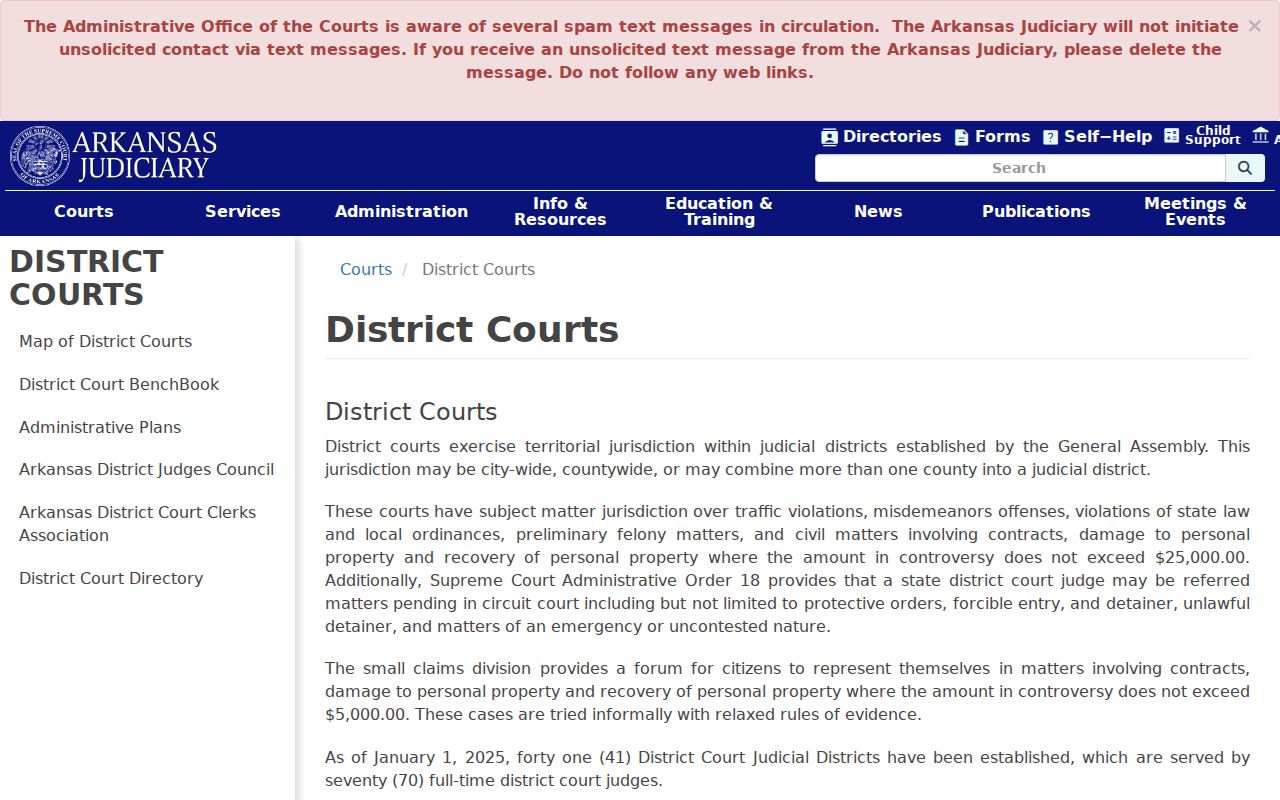
Both official sources point to one practical rule. Identify the court, not just the county, before calling, mailing, or visiting for a criminal record.
Pike County Criminal Setting Resets
An old setting can linger in the case-event history. That happens after the court continues or resets it. Find the newest notice, order, or scheduled event before assuming anything. District criminal and traffic sessions generally follow the first and third Tuesday pattern. Those meetings start at 9:00 a.m. under the 2026 plan. That pattern does not prove one case is set. Holidays, emergencies, and case-specific orders can move the date.
If two dates conflict: Read the later filed notice or order, then confirm the setting with the district court at 870-451-4602 or the Circuit Clerk at 870-285-2231.
The administrative plan lists 305 Industrial Park Drive as the district courtroom. The Judiciary, though, gives 114 North Washington, Suite A as the office and contact address. Call before you travel. Circuit dates never appear on the Pike County site. So ask the Circuit Clerk for the division or coordinator that controls the setting you need.
Sealed Dockets and Public Access
Arkansas court-record access rests mainly on judicial rules and the court's own authority. Public case information makes a useful first layer. Remote access does not make every filing or identifier public, though. Confidential material may be withheld. Juvenile, adoption, sealed, and similar records all qualify. A whole case, one filing, or selected data could be affected. Redaction strips out or hides protected details even when a public event stays visible.
Key rules:
Administrative Order No. 19 sets Arkansas court-record access rules and electronic-access limits.
Arkansas Code § 16-90-1401 et seq. governs the statutory process for eligible criminal-record sealing.
Arkansas Code § 9-27-309 restricts juvenile records under stated conditions.
A no-result screen does not prove sealing. Try accurate spelling first. Confirm the court. Then ask the custodian whether the problem is confidentiality, a sealing order, archive status, online coverage, or missing search data. The Arkansas Freedom of Information Act offers no shortcut around a court restriction. A lawful court process and an entered order are required. Only that can change how an eligible sealed record is treated.
Pike County Filed Criminal Records
When an event line is too short, request the paper behind it. Give the clerk the court, case number, document title, and filing date if you know it. Say whether you need a plain or certified copy. Include a return address, and ask for a fee quote and an approved payment method. Those details let the office pull one item instead of asking staff to dig. Arkansas Judiciary eFiling is a workspace for authorized filers, not the public criminal docket. A document accepted there can create a case event. Its image still may not go public online. Mailed circuit requests go to the Pike County Circuit Clerk's P.O. Box. For district records, ask the district clerk first how that office takes a request. Pike County has published no copy charge, local request form, ID rule, or processing time. Do not assume another county's terms apply here. Older Pike County criminal records may sit outside the current portal. Ask whether staff must check an office index, bound docket, microfilm, paper file, or archive. A clerk-authenticated certified copy is not the same as a browser printout. It is the right product when formal proof of the court record is required.